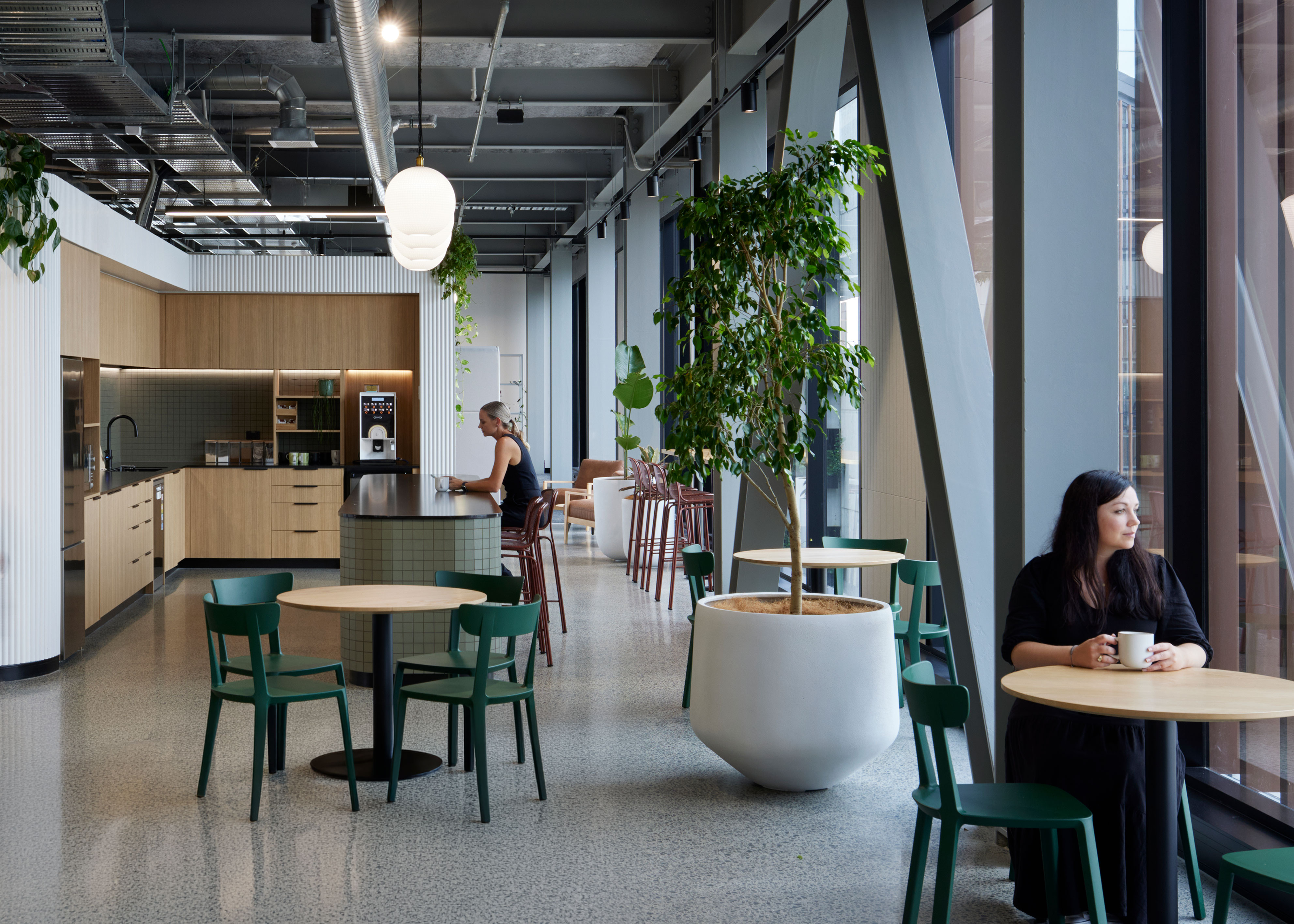
If the last few years have taught us anything, it’s that predicting the future is a risky game. Work patterns shifted almost overnight. Technology advanced faster than many fitouts could keep up.
Organisations that once planned workplaces ten years ahead are now revisiting their needs every couple of years. In this environment, the smartest approach isn’t trying to guess what’s coming next, it’s designing workplaces that can respond when the unexpected arrives.
Insights by Sam Thomas
Reading time 4 minutes
Key takeaways for busy leaders:
• Future-proofing isn’t about predicting what’s next but designing for change. Flexible workplaces reduce costly refits, support evolving work patterns, and give leaders confidence to adapt as needs shift.
• When people have choice, they adapt their workday without the space needing to change around them. The workplace becomes supportive of their best performance rather than restrictive.
Future-proofing doesn’t mean creating a space that never changes. In reality, change is inevitable. Future-proofing is about creating a workplace that can change easily, without disruption or unnecessary cost. It’s a mindset shift: from locking decisions in, to allowing room for evolution.
When we design for flexibility, we focus on the elements that tend to age fastest. Meeting styles change. Technology evolves. Team sizes expand and contract. The balance between individual and shared work shifts over time. Instead of fixing these elements permanently, we design them to adapt.
Within the next three years, according to ‘Shared Futures: Corporate Real Estate (CRE) Executives’ Strategies for 2025’ survey, “71% of CRE professionals anticipate changes to their overall infrastructure footprint. Of these, 44% expect to reduce their footprint, while 27% plan to increase it.” (1)
One practical example is the way meeting spaces are planned. Rather than relying solely on full-height, fixed-wall meeting rooms, some organisations are introducing ‘modular zones’. These are meeting pods, movable partitions, or clusters of rooms that can be reconfigured as needs change. A space that works as a project studio today can become a training suite or collaboration hub tomorrow. The benefit isn’t just flexibility; it’s avoiding expensive, disruptive refits every time collaboration priorities shift.
Another key strategy is designing for variety. While no one can say exactly how hybrid work will continue to evolve, we do know that people thrive when they have choice. Quiet corners for focused work, collaboration tables for teamwork, social hubs for connection, touchdown spaces for quick catchups, and call booths for privacy, all allow teams to adapt their workday without the space needing to change around them. The workplace becomes supportive rather than restrictive.
In the same survey by Gensler, “only 34% organisations are adding individual work settings for headcount growth. The rest are ‘boosting’ shared spaces like meeting rooms, team areas, social or learning zones, and communal amenities. For those downsizing, about 66% are moving to unassigned seating, and 25% are cutting individual work settings due to fewer employees in the office.”(1) This demonstrates how flexibility and adaptability is a determining factor in future-proofing for workplace performance and engagement success.
Yet, the real value of future-proofing goes beyond flexibility. It creates confidence. When leaders know their workplace can support new ways of working, they’re able to make decisions faster. Growth, change, or new technology doesn’t feel like a risk, it feels manageable. The space becomes an enabler rather than a constraint.
For property managers and project managers, this approach also means better long-term outcomes. Flexible design supports smoother transitions, protects investment, and extends the life of the fitout. It allows organisations to respond to change without starting from scratch each time.
You don’t need to know what the future holds to be ready for it. You simply need a workplace designed to respond rather than resist.
Reference:
(1) Shared Futures: Corporate Real Estate (CRE) Executives’ Strategies for 2025 Survey by Gensler Research Institute in partnership with CoreNet Global
--
About Sam Thomas
Senior Principal, Registered Architect // BArch(Hons), BAS, NZRAB, NZIA
Sam’s local and international experience on large-scale projects across workplace, commercial, tertiary education and health sectors, has cemented his strong project delivery skills. These attributes, combined with his significant design talent and leadership, see Sam work collaboratively with clients and stakeholders on concept design through to development, documentation and on-site delivery.
April 7, 2026

Sam Thomas
April 7, 2026

