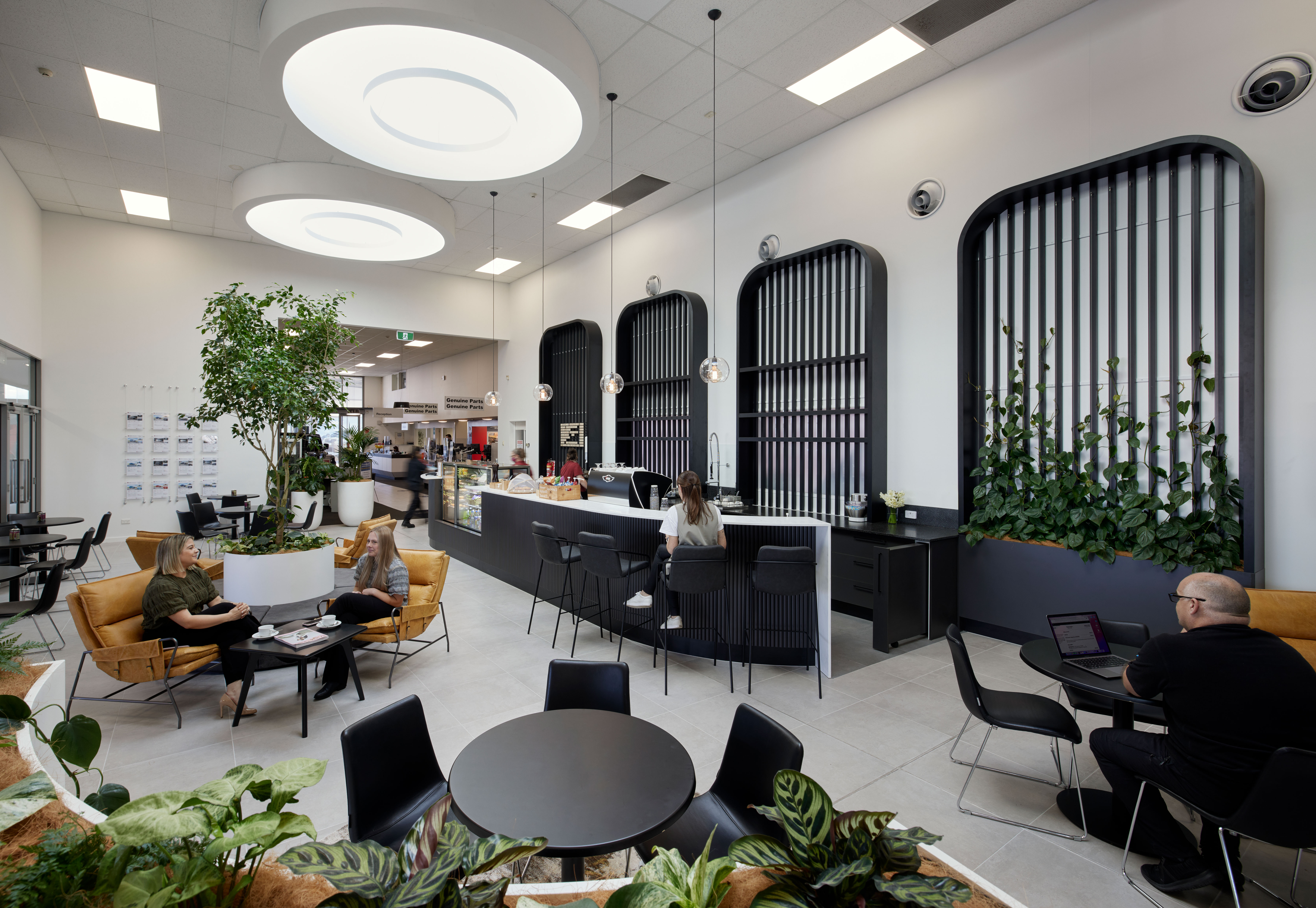
Culture can seem intangible, but you notice it the moment you walk into a workplace. You feel it in the welcome, hear it in how people greet one another, and see it in how teams gather, focus, celebrate wins, or step in to support each other when it matters most.
Culture lives in the small, everyday behaviours that happen between meetings. You can define values, run workshops, and launch culture-building initiatives, and those efforts absolutely matter. But the physical environment is an ever-present, consistent influence that guides how people show up and deliver. When designed with intention, it not only reinforces connection and belonging, but also sets the tone for accountability, consistency, and a higher standard of work, quietly shaping both culture and performance every day.
Insights by Jaune-Marie van der Merwe
Reading time 4 minutes
Key takeaways for busy leaders:
• Culture isn’t just what you say it is, it’s what people experience every day. The physical workplace quietly guides how people connect, focus, and support one another.
• When design is intentional, it makes positive behaviours easier and more natural, helping culture show up in everyday moments.
• Workplace design directly impacts work experience. A well designed and suitable workplace enables exploration, learning, fun, connection and belonging, and creates a strong sense of pride and loyalty to the organisation.
• A well-designed workplace doesn’t just shape how people feel, it also affects what they produce. When spaces support better collaboration, clearer communication, and a shared sense of purpose, teams are able to work more effectively. The result is higher-quality output and improved service delivery, achieved more consistently and with greater impact.
The spaces people move through each day have a profound effect on how they work, interact and feel. Design can encourage connection, or it can unintentionally keep people apart. It can support healthy habits, or it can make simple things feel like a chore. When we work with clients on culture-led workplace projects, we treat the workplace like a behavioural cue. The goal isn’t to force new habits but to create conditions where the right behaviours come to life. When the design considers culture, collaboration happens without effort, focus feels protected, belonging comes natural and wellbeing is supported.
Workplace design has a strong influence on organisational culture. It shapes employees’ work experience. An organisation might say collaboration is important, but if teams are physically separated with nowhere to naturally gather, the space works against that goal. According to Gensler Research Institute, “employees with a great workplace experience are five times more likely to experiment with new ways of working, four times more likely to report having fun at work, and twice as likely to feel proud of their company and recommend it as a great place to work.”(1) The environment is always sending a message, whether it’s intentional or not.
For example, one client we worked with wanted to strengthen cross-team collaboration. Collaboration existed, but staff were working in silos, and meetings were always scheduled rather than spontaneous. We introduced informal, non-bookable collaboration spaces with casual seating, writable walls, and flexible areas where people could meet without pre-arranging it. Within weeks, staff started gathering naturally for quick catchups, brainstorming sessions, and problem-solving discussions that hadn’t happened before. People don’t need to be told; they feel it in the space. The space didn’t demand collaboration; it simply made it easy.
Similar results have been reported internationally. Gensler’s research shows that, “70% of employees in higher-rated workplaces report experimenting with new ways of working, compared to just 14% in lower-rated workplaces. Similarly, those with great workplace experiences are 3.2 times more likely to work in a variety of spaces and 2.6 times more likely to engage in impromptu meetings with colleagues.” (1)
Beyond behaviour, good design also helps people feel a sense of belonging. When a workplace reflects who an organisation really is, people show up with pride. There’s a sense of clarity that comes from being in a space that feels authentic rather than generic.
For business leaders, workplace design operates on a strategic level. Beyond inspiring a sense of belonging, connection and pride, it enables performance and an accountability culture. Thoughtful design doesn’t just create an attractive environment; it actively supports how work gets done, assists with focus, and collaboration across teams. When space and culture are intentionally aligned, people are not only more comfortable and connected, but they are also better equipped to deliver work to a higher standard. This means workplace design is not just a cultural asset, but a performance driver. For leaders, the benefit is tangible: more reliable outcomes, fewer inefficiencies, and a higher, more consistent standard of work and service delivery across the organisation.
A thriving workplace culture isn’t created by design alone, but design plays a powerful supporting role. When the environment reinforces the behaviours and values that matter most, culture stops being something you talk about and becomes something people experience.
References:
(1) The State of Work in 2025 Report: How AI, Gen Z, and workplace design are reshaping office norms. Envoy workplace and visitors solution platform in partnership with Hanover Research
(2) The workplace Reset: Global Workplace Survey 2025. Gensler Research Institute in partnership with CoreNet Global
March 31, 2026

Sam Thomas
March 31, 2026

