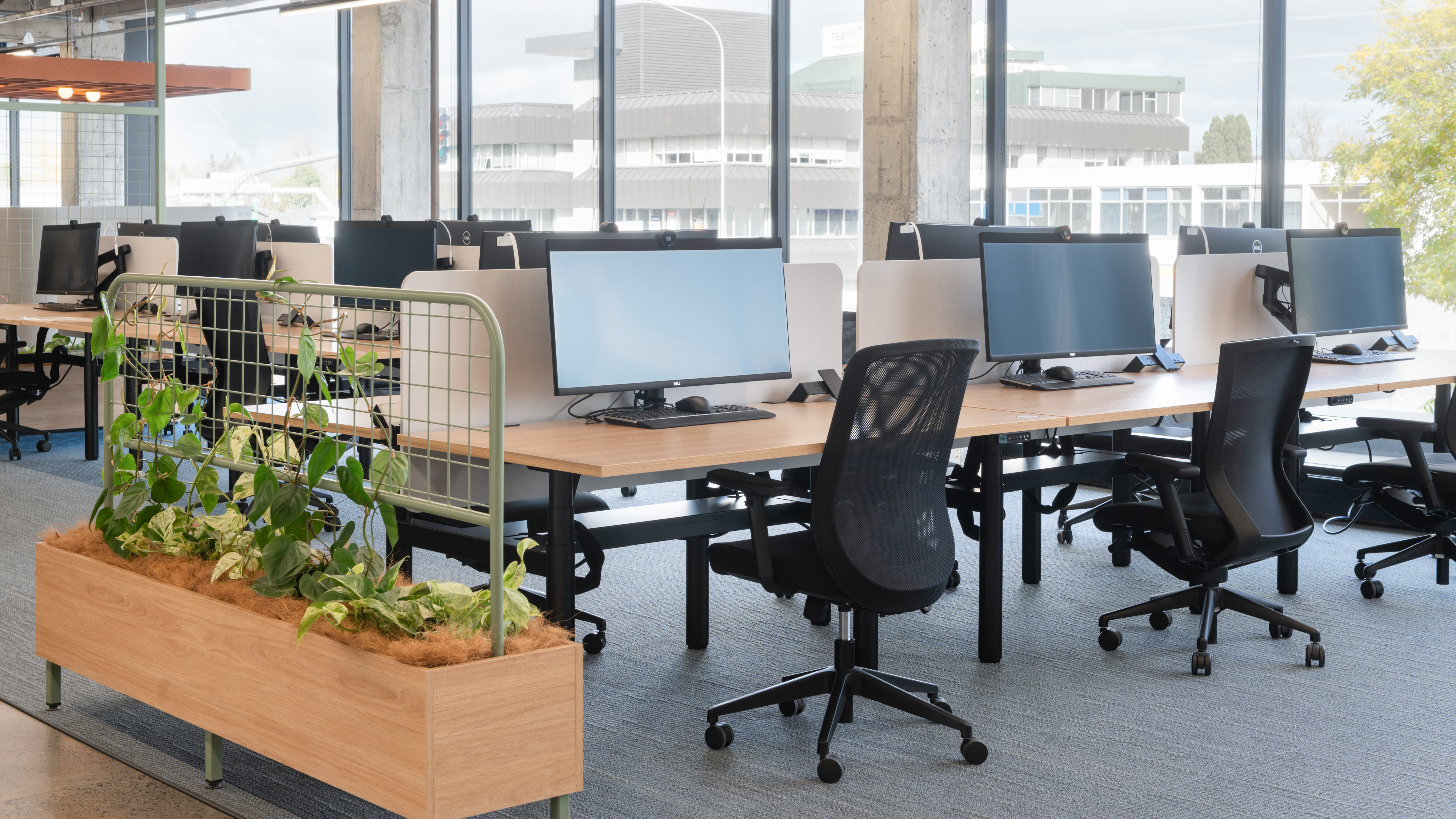
If you ask people why they come into the office, you’ll get a wide range of answers. Some come for connection. Some come for structure. Others come simply because it’s expected. Increasingly, the organisations winning the talent and engagement race are the ones designing workplaces people want to come to, not the ones they feel they have to.
Insights by Sam Thomas
Reading time 4 minutes
Key takeaways for busy leaders:
• Workplaces that succeed are those that offer something people can’t get at home. Connection with colleagues, culture energy, and suitable spaces that support how work really happens are integral to modern workplaces.
• Design plays a central role in turning attendance from obligation into choice. A workplace that feels like a destination creates its own momentum. People stay longer, connect more easily, and engage more deeply with their work and each other. Culture strengthens not because it’s mandated, but because the environment supports it.
• When the environment aligns with how people want to work, it becomes a strategic asset, attracting top performance employees, a subtle but powerful competitive advantage, rather than a fixed cost.
You can feel the difference almost immediately. A destination workplace has a certain energy to it. People arrive with a sense of purpose. Teams move naturally between focused work and quick conversations. Social spaces feel lived-in rather than improvised. There’s buzz, and it feels natural. Meetings still happen, but so do casual catchups, those informal moments where conversations spark new ideas, problems are solved, and relationships are built without being planned.
In 2025, “54% of surveyed organisations added new workplace amenities, like wellness spaces, focused and co-creation spaces and nature views, among others.”(1) In recently remodelled workplaces, “the percentage of employees who feel they have a choice in where they work within the office has risen from 64% in pre-pandemic offices to 76%. Additionally, newer offices score higher on ratings of key environmental factors, such as lighting, air quality, temperature control, and cleanliness.”(2)
In contrast, an obligation workplace feels very different. People arrive because policy requires it, not because the space adds value to their day. They sit at the same desk, put their headphones on, and leave as soon as they can. The work may be meaningful, but the environment doesn’t give people a reason to choose it over working from home. Over time, that lack of engagement can slowly affect culture, collaboration, productivity and retention.
Design plays a key role in shifting a workplace from obligation to destination. One client told us their staff were only coming into the office because they were required to be there three days a week. When asked what people liked most about being onsite, the answer wasn’t the office, it was the ‘real coffee’ available from nearby cafés. That small comment was telling.
We used that insight and built it into the design. Instead of competing with cafés, we brought that experience into the workplace. The staff area was redesigned to feel more like a café environment, with informal collaboration spots, comfortable seating, and flexible work settings. The space now feels inviting, encourages movement, conversation, and choice throughout the day. The shift was subtle but effective. The result? Attendance increased and more importantly, people began choosing to be there rather than feeling compelled.
This idea extends beyond individual client examples. Destination workplaces are built around variety and choice. They recognise that people come into the office for different reasons on different days. Spaces for quiet focus sit alongside areas for collaboration and social connection. Technology works seamlessly. Acoustics, light, and comfort are considered just as carefully as layout and aesthetics. The result is an environment that supports the full rhythm of the workday, and makes coming to the office a positive, energising experience.
Designed workplaces that suit organisational needs create quality employee experiences that give staff a good reason to make their daily commute. “80% of employees in high-quality offices say their company is a great place to work, compared to 43% of those working in lower-quality spaces.”(3)
For leaders and property managers, this shift has practical implications. Designing a destination workplace isn’t about adding gimmicks or perks. It’s about understanding what people value, what brings them together, and how space can support that in a genuine way. When the environment aligns with how people want to work, it becomes a strategic asset, attracting top performance employees, a subtle but powerful competitive advantage, rather than a fixed cost.
Ultimately, a workplace that feels like a destination creates its own momentum. People stay longer, connect more easily, and engage more deeply with their work and each other. Culture strengthens not because it’s mandated, but because the environment supports it. And in a competitive market, that quiet shift from obligation to choice can become a meaningful advantage.
“With competition for talent heating up and businesses doubling down on their national footprints, organisations are taking bolder steps to evolve their workplace interiors than at any point since the pandemic. Their goal: reconnect people with purpose and deliver daily strategic value that attracts talent, drives culture, and sparks innovation.” (4)
References:
(1) The State of Work in 2025 Report: How AI, Gen Z, and workplace design are reshaping office norms. Envoy workplace and visitors solution platform in partnership with Hanover Research
(2) The Workplace Reset: Global Workplace Survey 2025. Gensler Research Institute in partnership with CoreNet Global
(3) Moving Beyond Employee Presence to Workplace Performance Survey 2024. Gensler Research Institute
(4) The 6 Trends Shaping Design in 2026. Gensler Research Institute
--
About Sam Thomas
Senior Principal, Registered Architect // BArch(Hons), BAS, NZRAB, NZIA
Sam’s local and international experience on large-scale projects across workplace, commercial, tertiary education and health sectors, has cemented his strong project delivery skills. These attributes, combined with his significant design talent and leadership, see Sam work collaboratively with clients and stakeholders on concept design through to development, documentation and on-site delivery.
April 23, 2026

Sam Thomas
April 23, 2026

